
Juliana takes the microphone at Dol Dol
· Sieku, Dol Dol, Laikipia
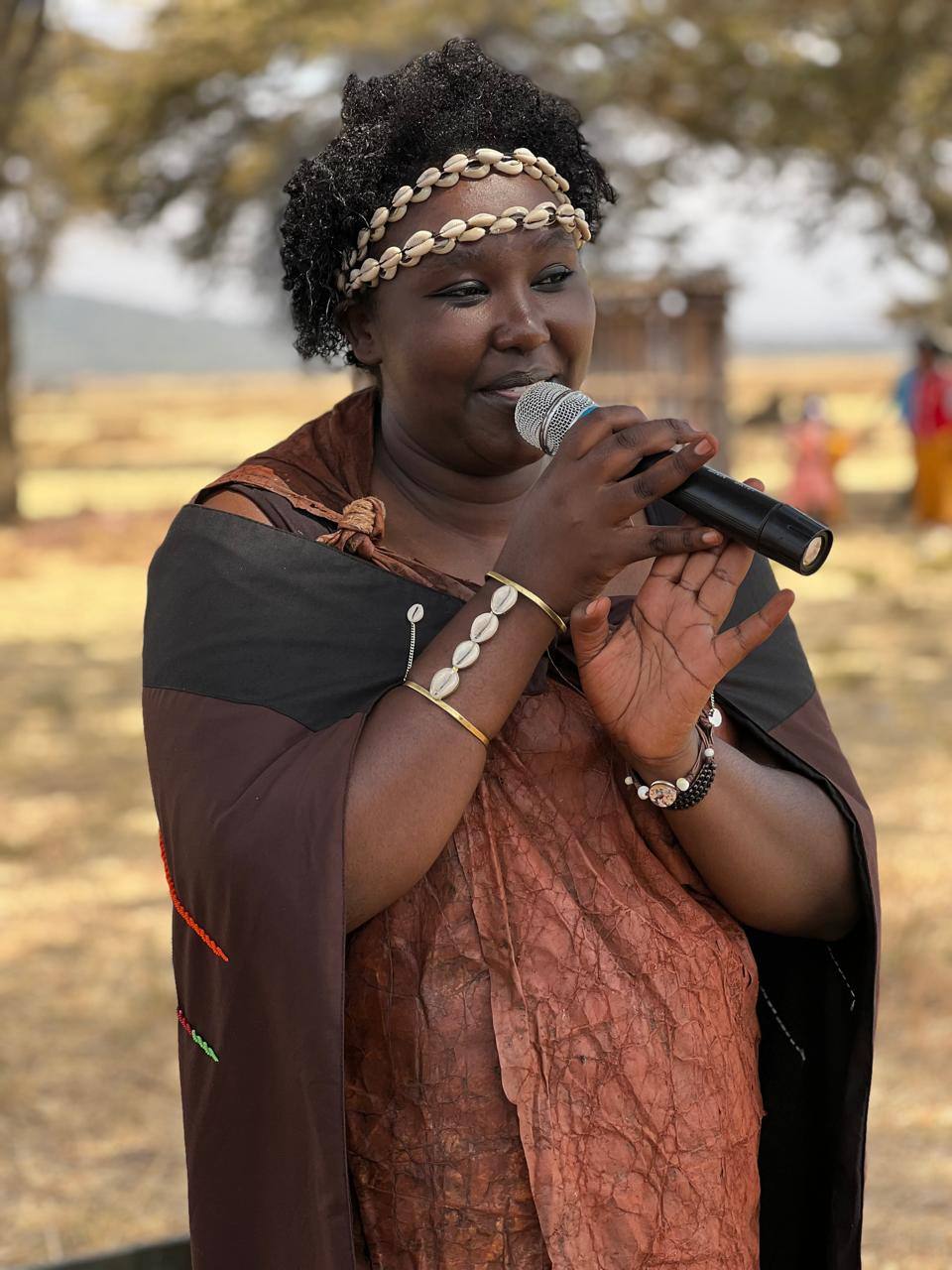
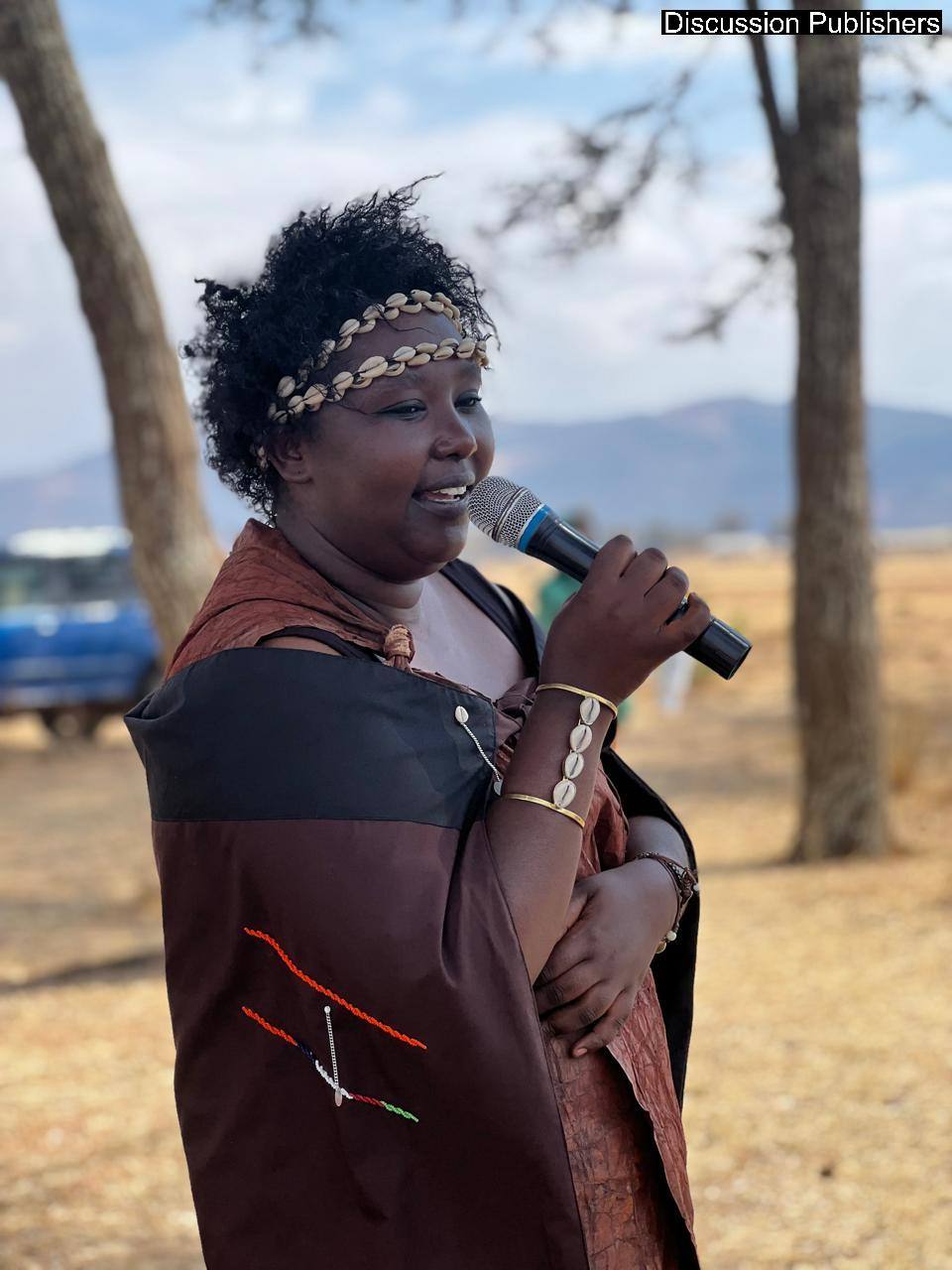
In cowrie shells and hide dress, Juliana stood in front of the Sieku gathering and did what heritage work depends on: she made culture audible.
Every forum has a moment when the room changes. At Sieku it came when Juliana took the microphone. Dressed in beadwork and hide, she moved the meeting from grievance to performance and back again — song, address, and a reminder that Yaaku identity is not a museum item but something people can stand up and be.
Her presence answered a question that had hung over the day. If assimilation is so far advanced, what is left to revive? The answer, visibly: dress, ornament, song, ceremony, protocol, and women who still know how to lead a gathering in the old form.
Cultural leadership like this is the practical engine of revival. Elders hold the language, but it is figures who can perform and teach in public who move it into the next generation, into schools, into county cultural days, into film.
Utu Heritage is working with cultural leaders across its focus communities to record performance properly, credit the performers, and build paid roles into the heritage tourism circuit — so that carrying culture in public is a livelihood, not a favour.
“We are still here. Listen to how we sound.”
Coverage of Utu Heritage stories by African Heritage News (ahnews.co.ke), an arm of Discussion Publishers (discussionpublishers.com), who also sponsor this documentation work.
From the same field visit
More stories
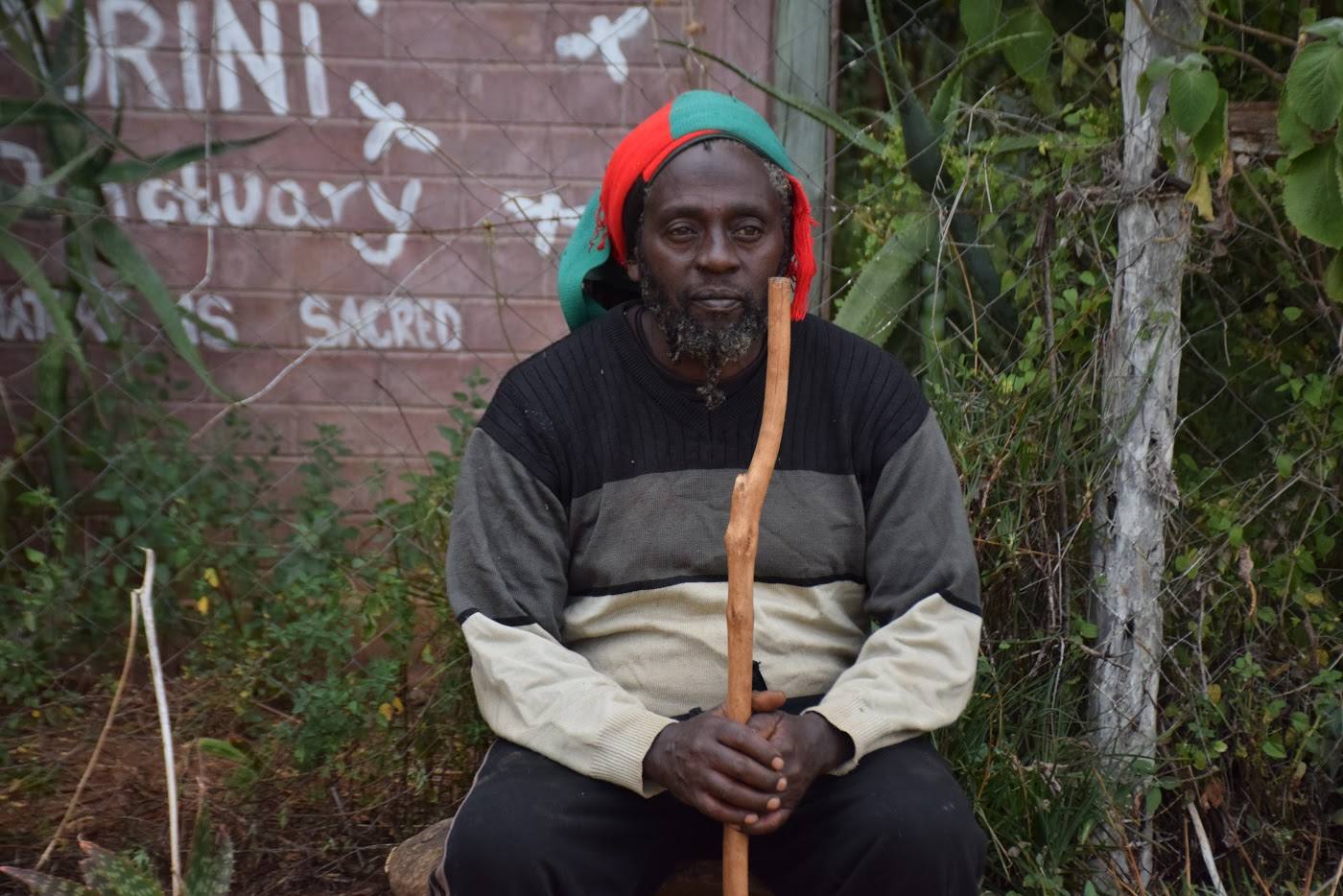
Inside Porini Sanctuary: the land people still call sacred
Porini Sanctuary, Murangai, Nanyuki
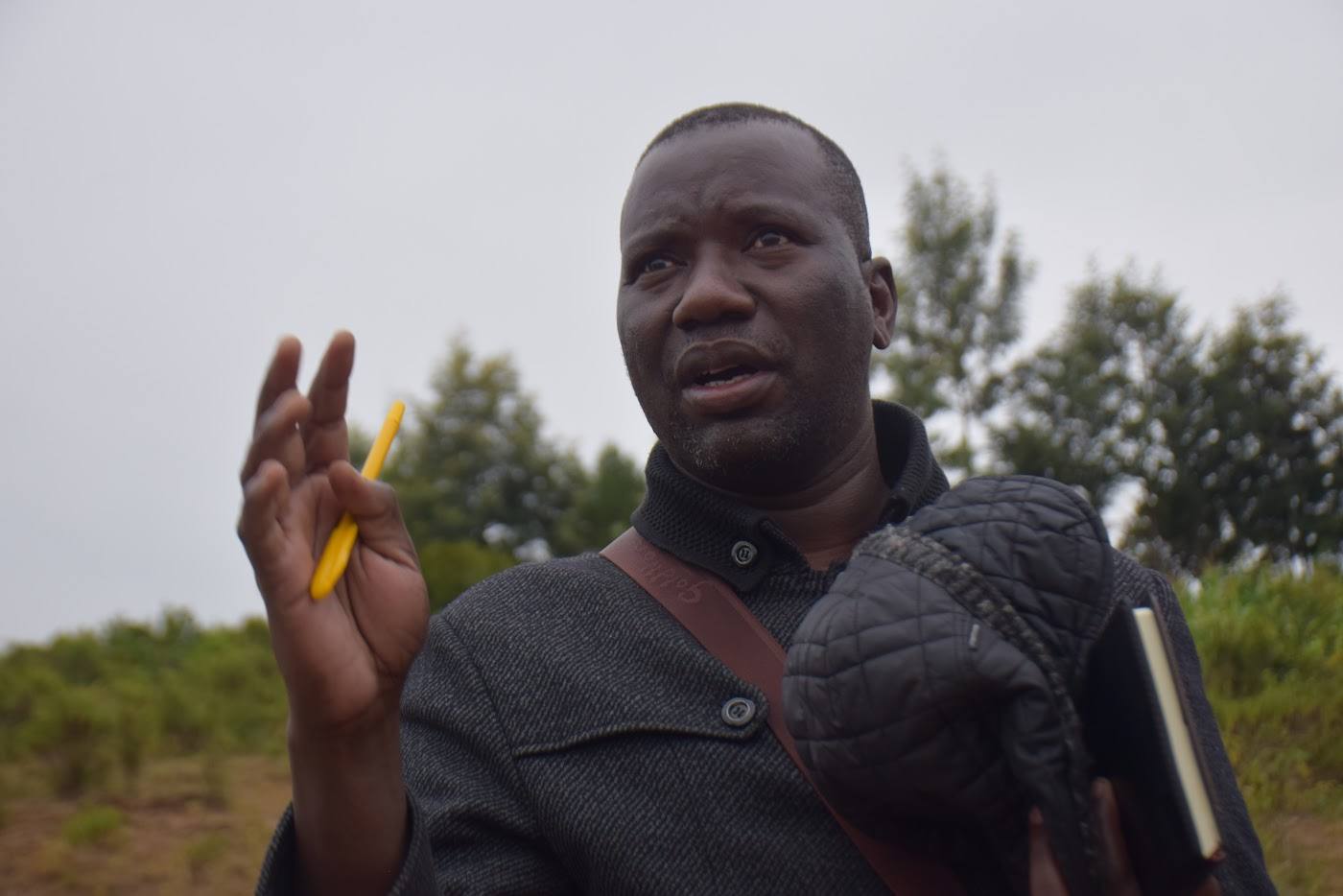
The river that stopped coming back: Murangai River and the flower farms
Murangai River, Nanyuki
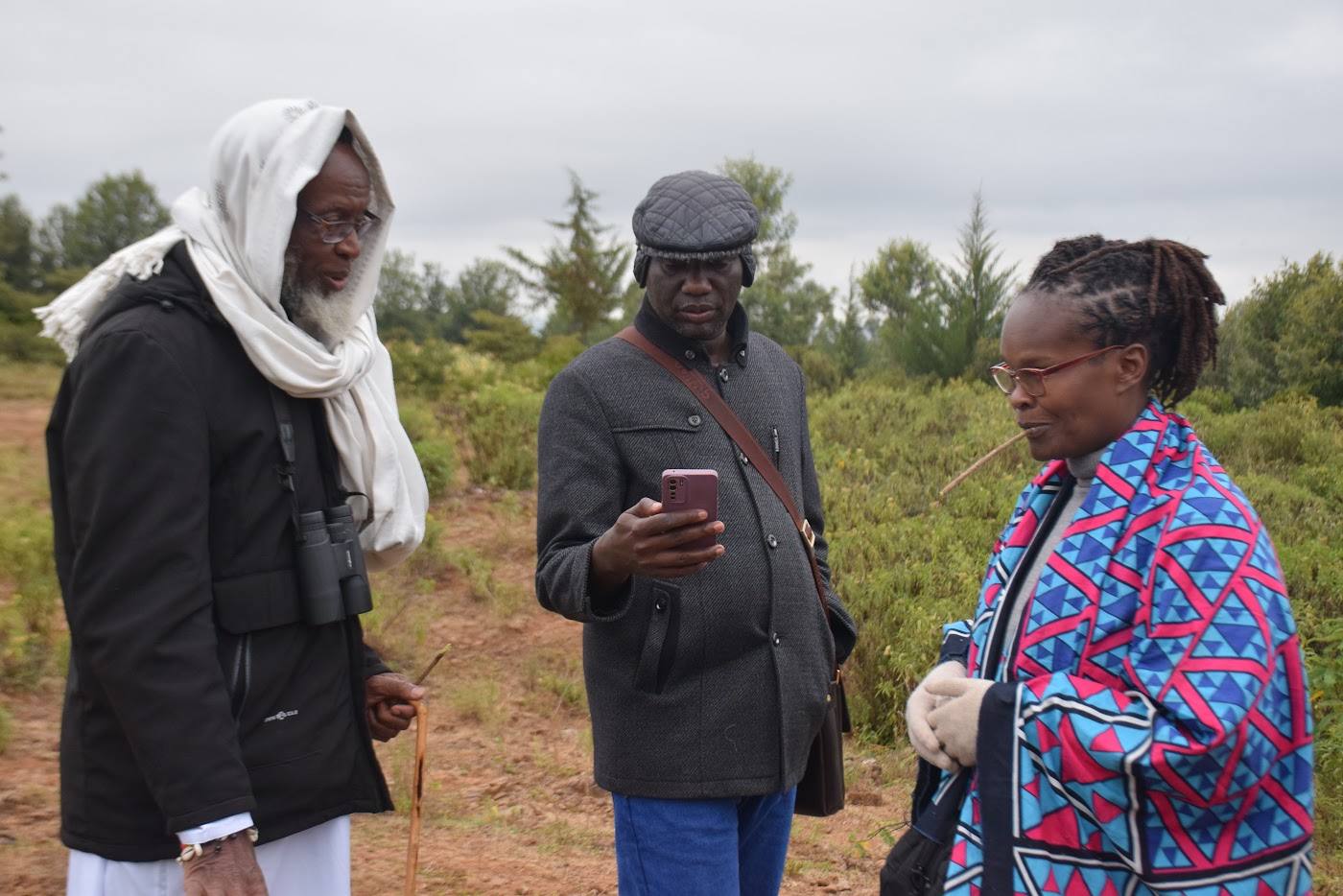
Elders, researchers and youth read one landscape at Porini
Porini Sanctuary, Nanyuki